
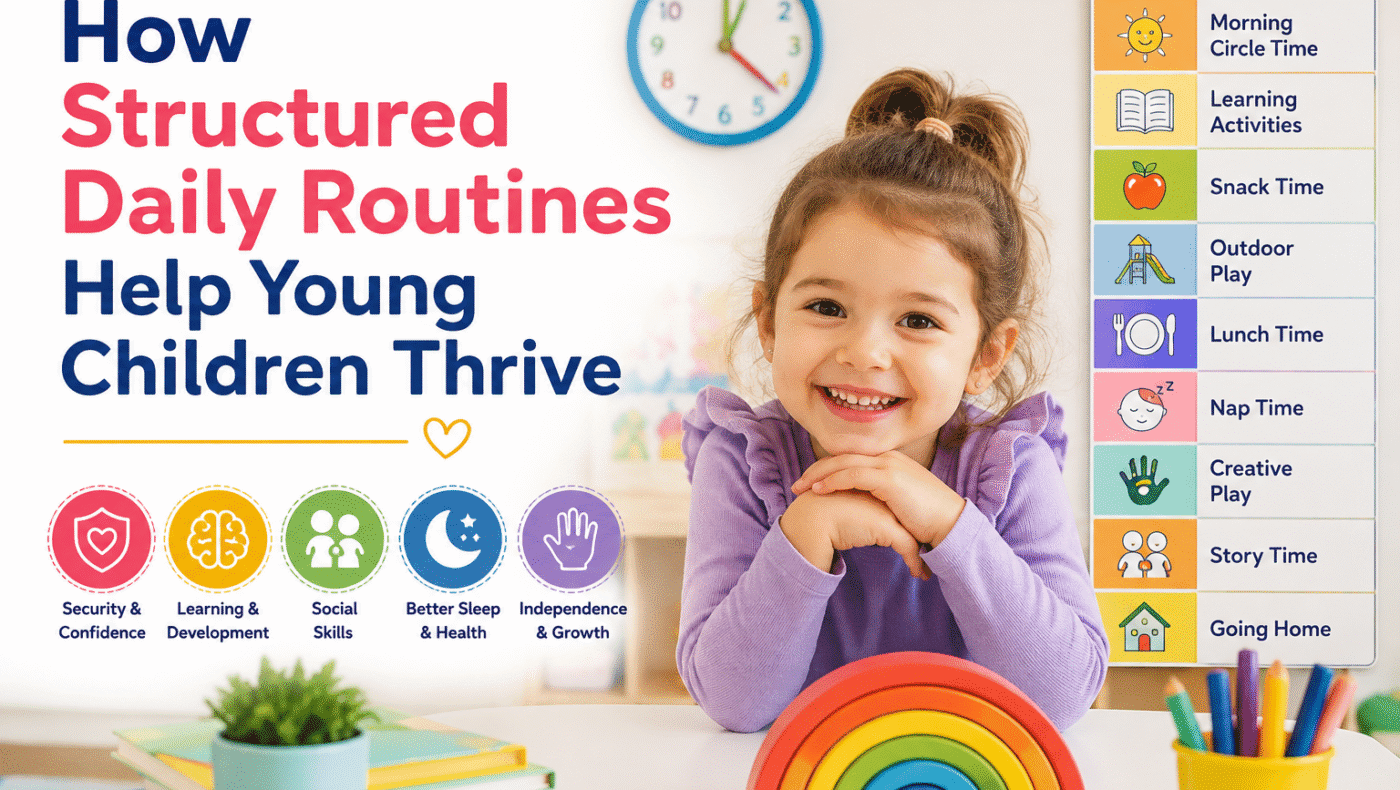
As parents, we all want our children to grow into happy, healthy, and confident individuals. One of the most effective ways to support their development is by providing a structured daily routine. While routines may seem simple, they create a stable environment where children know what to expect, making them feel secure and ready to explore the world around them.
At Wonderland Childcare & Learning Center, structured daily routines are thoughtfully designed to balance learning, play, nutrition, rest, and social interaction. These daily schedules help children develop essential life skills while making each day enjoyable and meaningful.
Why Daily Routines Matter
Young children are naturally curious, but they also thrive on consistency. Predictable schedules reduce uncertainty and help children understand what comes next throughout the day. Whether it’s circle time, snack time, outdoor play, or story time, knowing the day’s sequence helps children feel more comfortable and confident.
When children understand their daily routine, they spend less energy worrying about what’s happening next and more energy focusing on learning, building friendships, and exploring new experiences.
Building Emotional Security
A structured routine provides emotional stability. Children who know what to expect each day are generally calmer and more confident because they feel safe in their environment.
Regular routines help children:
- Feel secure in unfamiliar situations
- Reduce anxiety during transitions
- Develop trust in caregivers and teachers
- Build emotional resilience
- Improve self-confidence
For younger children, especially infants and toddlers, consistency creates a sense of comfort that supports healthy emotional development.
Encouraging Independence
One of the greatest benefits of structured daily routines is that they help children become more independent.
As children participate in the same activities every day, they begin to understand expectations and take responsibility for simple tasks such as:
- Washing their hands before meals
- Putting away toys after playtime
- Hanging up backpacks
- Cleaning up learning materials
- Preparing for nap time
These everyday responsibilities teach valuable life skills while building confidence and self-esteem.
Supporting Cognitive Development
Children learn best when they have a predictable learning environment. Daily routines create opportunities for consistent educational experiences that strengthen cognitive skills.
A balanced schedule includes activities that encourage:
- Early literacy
- Language development
- Counting and math concepts
- Problem-solving
- Memory skills
- Creative thinking
When learning activities occur regularly, children absorb information more effectively and develop a lifelong love of learning.
Improving Social Skills
Structured group activities help children develop important social and communication skills.
During circle time, group projects, and cooperative play, children learn how to:
- Share with others
- Take turns
- Listen carefully
- Express emotions respectfully
- Solve conflicts peacefully
- Work together toward common goals
These social experiences prepare children for kindergarten and future classroom success.
Helping Children Transition Smoothly
Transitions can sometimes be challenging for young children. Moving from one activity to another without preparation may cause frustration or emotional outbursts.
Structured routines include clear transition periods that help children adjust naturally between activities.
Examples include:
- Singing cleanup songs
- Giving gentle reminders before activity changes
- Visual schedules
- Countdown timers
- Positive encouragement
These strategies reduce stress and help children adapt more easily throughout the day.
Promoting Healthy Habits
Daily routines also encourage healthy lifestyle habits that children can carry into adulthood.
Consistent schedules include:
Nutritious Meals and Snacks
Regular eating times help children maintain energy levels throughout the day while developing healthy eating habits.
Physical Activity
Outdoor play and movement activities improve:
- Gross motor skills
- Balance
- Coordination
- Physical fitness
- Overall health
Rest and Nap Time
Adequate rest is essential for brain development and emotional regulation. Scheduled quiet time allows children to recharge and return to activities refreshed.
Creating Better Sleep Patterns
Children who follow consistent daytime routines often experience improved nighttime sleep.
Predictable schedules help regulate the body’s internal clock, making bedtime easier and improving sleep quality.
Well-rested children typically demonstrate:
- Better concentration
- Improved behavior
- Stronger immune systems
- Greater emotional control
- Enhanced learning abilities
Strengthening Parent-Teacher Partnerships
Structured routines benefit parents as well.
Knowing your child’s daily schedule allows families to reinforce similar routines at home, creating consistency between childcare and family life.
Parents can also discuss:
- Learning milestones
- Daily achievements
- Behavioral progress
- Social interactions
- Nutrition and sleep habits
Strong communication between parents and teachers creates the best possible environment for children’s success.
Preparing Children for Kindergarten
Kindergarten introduces children to more structured classroom environments with scheduled lessons, group activities, and independent responsibilities.
Children who are familiar with routines often adjust more quickly because they already understand:
- Following schedules
- Listening to instructions
- Participating in group learning
- Managing transitions
- Completing simple responsibilities
These foundational skills help children begin school with confidence.
What a Structured Day Looks Like
While every childcare center has its own schedule, a balanced daily routine often includes:
- Morning arrival and greetings
- Circle time
- Educational learning activities
- Healthy snacks
- Outdoor play
- Creative arts and crafts
- Story time
- Lunch
- Rest or nap time
- Afternoon learning centers
- Music and movement
- Pickup and family communication
This combination of learning, play, rest, and social interaction supports every aspect of a child’s development.
Flexibility Within Structure
A structured routine doesn’t mean every minute is rigidly planned.
Experienced educators understand that children need flexibility for:
- Individual learning styles
- Creative exploration
- Emotional support
- Special classroom events
- Outdoor discoveries
- Child-led learning opportunities
The goal is to provide consistency while remaining responsive to children’s individual needs.
The Long-Term Benefits of Daily Routines
Children who grow up with structured routines often develop skills that benefit them throughout life, including:
- Strong self-discipline
- Better time management
- Increased independence
- Improved emotional regulation
- Enhanced academic performance
- Greater confidence in new situations
- Positive social relationships
- Healthy daily habits
These advantages continue well beyond the preschool years and contribute to lifelong success.
Why Families Choose Wonderland Childcare & Learning Center
At Wonderland Childcare & Learning Center, every day is thoughtfully planned to create a nurturing environment where children can learn, grow, and thrive. Our structured daily routines combine engaging educational activities, creative play, nutritious meals, outdoor exploration, and quiet rest periods to support the whole child.
Our caring educators understand that consistency builds confidence. By providing a predictable yet flexible schedule, we help children develop independence, social skills, emotional resilience, and a love for learning that prepares them for kindergarten and beyond.
Final Thoughts
A structured daily routine is much more than a schedule—it is the foundation for healthy growth and lifelong success. When children know what to expect, they feel secure enough to explore, learn, build friendships, and develop essential life skills.
If you’re looking for a childcare center that prioritizes your child’s overall development through engaging daily routines, Wonderland Childcare & Learning Center offers a supportive environment where every child has the opportunity to flourish.
Whether your child is an infant, toddler, or preschooler, the right routine can make all the difference in helping them become confident, capable, and ready for the future.