Texas Rising Star Three-Star

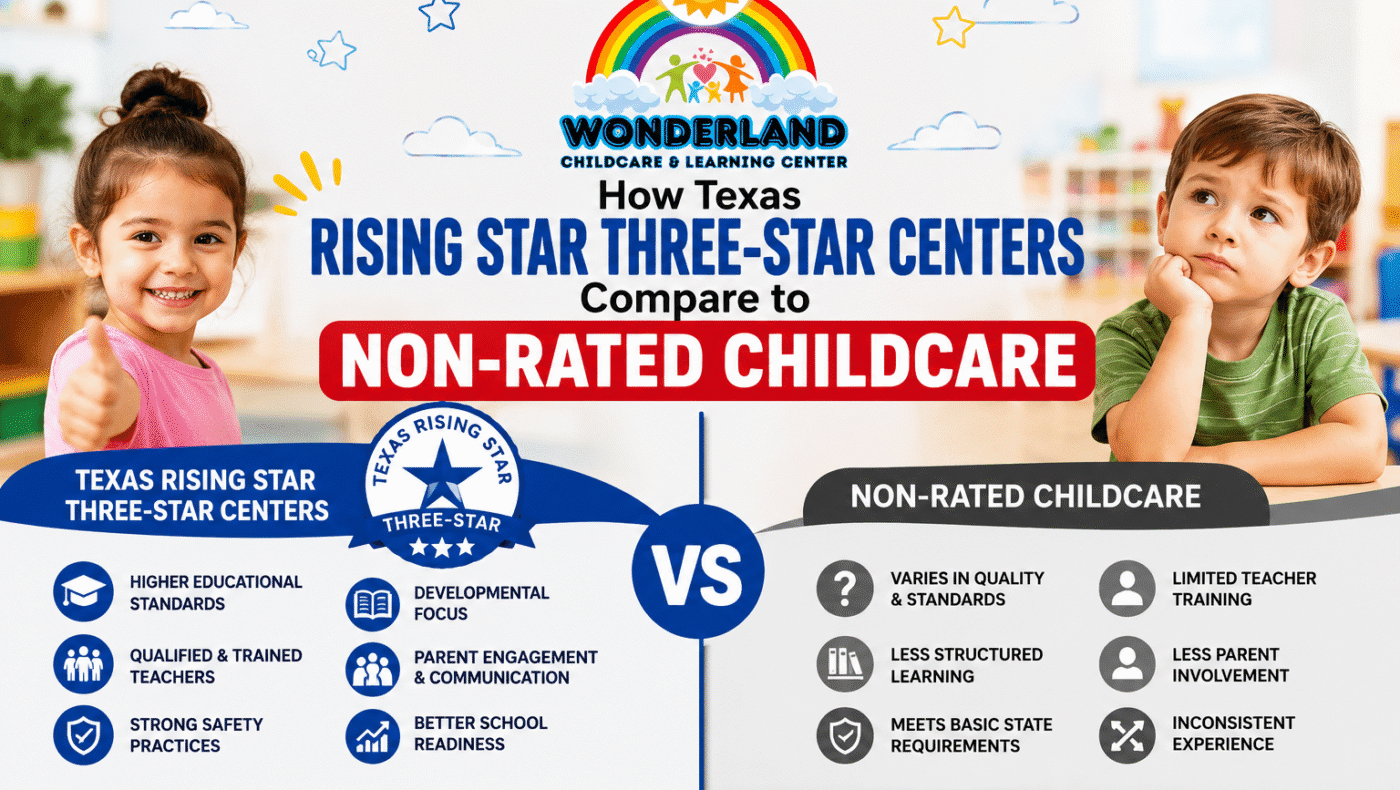
How Texas Rising Star Three-Star Centers Compare to Non-Rated Childcare

Choosing the right childcare center is one of the most important decisions parents make. A daycare center becomes more than just a place where children spend time while parents work; it serves as an environment where young minds grow, learn, socialize, and build the foundation for future success.

Parents in Texas often come across the Texas Rising Star (TRS) certification when searching for quality childcare options. While many daycare facilities meet state licensing requirements, not every center participates in quality-rating systems. This creates an important question for families: How does a Texas Rising Star Three-Star center compare to a non-rated childcare center?

Understanding the differences between these childcare options can help parents make informed decisions that align with their expectations and their child’s developmental needs.

In this article, we will explore the key differences between Texas Rising Star Three-Star centers and non-rated childcare programs across important areas including educational quality, teacher qualifications, safety standards, learning environments, child development, and long-term benefits.

Understanding Texas Rising Star Certification

Texas Rising Star is a quality improvement and rating system designed to identify childcare providers that exceed basic state childcare licensing standards.

The program evaluates centers using strict criteria that include:

  • Staff qualifications
  • Teacher-child interactions
  • Learning environments
  • Parent engagement
  • Child development support
  • Curriculum quality
  • Administrative practices

Centers receive ratings ranging from:

  • Two-Star
  • Three-Star
  • Four-Star

A Three-Star childcare center demonstrates a high level of quality and commitment to children’s development.

Non-rated childcare centers, on the other hand, may still be legally licensed and operate within state regulations but have not undergone the additional Texas Rising Star evaluation process.

Basic Licensing vs Enhanced Quality Standards

One of the largest differences between a Texas Rising Star Three-Star center and non-rated childcare is the level of standards each follows.

Non-rated childcare centers

These centers typically meet state minimum licensing requirements, including:

  • Health regulations
  • Safety standards
  • Staff background checks
  • Basic caregiver qualifications

Meeting these standards allows centers to legally operate.

However, basic licensing often focuses on minimum requirements rather than enhanced educational quality.

Texas Rising Star Three-Star centers

Three-Star centers go significantly beyond basic standards by demonstrating excellence in:

  • Child learning experiences
  • Classroom interactions
  • Teacher education
  • Parent involvement
  • Child development practices

Rather than simply meeting requirements, these centers actively pursue higher-quality care.

Teacher Qualifications and Training

Teachers play one of the most important roles in early childhood development.

The differences in staff training between Texas Rising Star Three-Star centers and many non-rated facilities can be substantial.

Texas Rising Star Three-Star centers

Teachers generally receive:

  • Ongoing professional development
  • Specialized early childhood education training
  • Child development instruction
  • Behavioral management education
  • Enhanced classroom teaching skills

Professional growth remains an ongoing process.

Non-rated childcare centers

Requirements may vary widely.

Some non-rated centers employ highly skilled educators, while others may only meet minimum state requirements.

Potential limitations may include:

  • Limited continuing education
  • Fewer training opportunities
  • Less emphasis on developmental learning strategies

Consistency often differs significantly among non-rated facilities.

Curriculum and Learning Experiences

Parents increasingly expect daycare centers to provide educational opportunities rather than simple supervision.

This is another area where Texas Rising Star centers often stand apart.

Texas Rising Star Three-Star programs

Learning experiences are structured around developmental goals.

Activities may include:

  • Reading sessions
  • Literacy exercises
  • Music and movement
  • Early math skills
  • Creative arts
  • Science exploration
  • Problem-solving activities

Programs intentionally support age-appropriate development.

Children learn through play while developing critical thinking skills.

Non-rated childcare programs

Educational quality varies considerably.

Some centers may offer strong learning activities, while others focus primarily on supervision and free play.

Children could experience:

  • Less structured learning
  • Limited educational planning
  • Reduced developmental assessments

Because no formal quality rating exists, parents often need to investigate learning standards themselves.

Classroom Environment Comparison

Children spend many hours in daycare environments.

Classroom quality directly affects behavior, learning, and emotional development.

Texas Rising Star Three-Star classrooms

Classrooms are often designed to encourage:

  • Exploration
  • Creativity
  • Social interaction
  • Independence
  • Safe movement

Centers typically include:

  • Learning stations
  • Reading corners
  • Sensory activities
  • Age-specific educational materials

Environments are carefully organized to support learning goals.

Non-rated childcare classrooms

The classroom environment can vary widely depending on management decisions.

Some may provide exceptional learning spaces while others may have:

  • Limited educational resources
  • Less organization
  • Fewer developmental materials

Quality differences become difficult to predict without visiting the facility.

Teacher-to-Child Ratios

The amount of individual attention children receive matters greatly.

Texas Rising Star programs frequently maintain better teacher-to-child ratios than minimum state requirements.

Benefits of lower ratios include:

  • Increased supervision
  • More individualized learning
  • Stronger emotional support
  • Better communication
  • Faster identification of developmental concerns

Children often thrive when teachers have time to focus on individual needs.

Non-rated centers

Some non-rated providers may follow only required minimum ratios.

Higher group sizes can sometimes result in:

  • Less personalized attention
  • Reduced interaction
  • More classroom distractions

However, this can vary from center to center.

Child Development Support

Quality childcare focuses on the whole child.

Development includes multiple areas:

  • Cognitive growth
  • Emotional health
  • Physical development
  • Social skills
  • Language abilities

Texas Rising Star Three-Star centers

Developmental support is intentional and ongoing.

Teachers observe children’s progress and adapt activities accordingly.

Programs encourage:

Language development

Children build vocabulary and communication skills.

Social development

Children practice teamwork and sharing.

Emotional development

Children learn emotional awareness and self-regulation.

Physical development

Activities improve coordination and motor skills.

Non-rated childcare centers

Developmental practices depend heavily on individual providers.

Some may have strong systems in place, while others may not formally track growth.

Parent Communication and Engagement

Parents want to remain actively involved in their child’s progress.

Communication quality often differs between rated and non-rated centers.

Texas Rising Star Three-Star centers

Parent involvement receives significant emphasis.

Communication methods often include:

  • Progress reports
  • Parent meetings
  • Daily updates
  • Family events
  • Mobile communication tools

Parents become active partners in the learning process.

Non-rated childcare centers

Communication practices vary.

Some provide excellent updates, while others may offer only basic information.

Possible limitations include:

  • Less frequent reporting
  • Limited family involvement
  • Reduced developmental discussions

Safety and Health Standards

Safety is always a top priority.

Both Texas Rising Star centers and licensed non-rated centers must follow state safety requirements.

However, Three-Star centers frequently exceed minimum expectations.

Texas Rising Star Three-Star safety practices

These may include:

  • Enhanced supervision procedures
  • Organized emergency plans
  • Child-safe classroom layouts
  • Routine safety reviews
  • Strong sanitation procedures

Non-rated childcare facilities

Minimum requirements are generally followed.

Quality beyond basic standards varies among providers.

Parents should always ask questions regarding:

  • Security systems
  • Emergency procedures
  • Health policies
  • Cleaning routines

School Readiness Comparison

Parents want children to enter kindergarten prepared and confident.

School readiness extends beyond knowing letters and numbers.

Children also need:

  • Listening skills
  • Independence
  • Communication abilities
  • Social interaction skills
  • Problem-solving abilities

Texas Rising Star Three-Star centers

Programs intentionally prepare children for future academic environments.

Children become familiar with:

  • Structured schedules
  • Group learning
  • Instruction-following
  • Classroom expectations

Non-rated childcare programs

School readiness preparation can differ significantly.

Some programs emphasize academics while others focus primarily on childcare.

Consistency in Quality

One challenge parents face with non-rated childcare involves predicting quality.

Texas Rising Star Three-Star centers

Centers undergo evaluations and must maintain performance standards.

This creates more consistency across important areas.

Parents often know they can expect:

  • Structured learning
  • Qualified teachers
  • Child-centered environments
  • Development-focused programs

Non-rated centers

Experiences vary widely.

Some provide excellent care while others may only satisfy minimum requirements.

Without quality assessments, parents rely heavily on:

  • Reviews
  • Recommendations
  • Personal observations

Long-Term Benefits for Children

Research continues to show that quality early education influences future outcomes.

Children who receive strong early learning experiences often demonstrate:

  • Better academic performance
  • Stronger communication skills
  • Improved social behaviors
  • Greater confidence
  • Better emotional management

Texas Rising Star Three-Star programs are designed specifically to strengthen these developmental foundations.

While non-rated childcare can still provide positive experiences, quality may be less predictable.

Cost Differences

Many parents naturally consider cost when comparing childcare options.

Three-Star centers may sometimes cost more because they invest in:

  • Staff training
  • Educational resources
  • Quality improvement efforts
  • Classroom materials
  • Enhanced programming

However, families often view these costs as an investment in long-term child development.

Some non-rated centers may offer lower tuition rates.

Parents should consider overall value rather than cost alone.

Lower prices do not automatically mean lower quality, but understanding what services and developmental support are included is important.

Questions Parents Should Ask During Childcare Visits

Regardless of whether a center is rated or non-rated, parents should ask important questions before making a decision:

  • What curriculum do you use?
  • How are teachers trained?
  • How are behavioral issues handled?
  • How do you communicate with parents?
  • What safety procedures are in place?
  • How do you monitor child development?
  • What are your teacher-to-child ratios?

Observing classrooms can also provide valuable insight into daily operations.

Watch for:

  • Happy and engaged children
  • Positive teacher interactions
  • Clean environments
  • Organized learning areas
  • Structured activities

Final Thoughts

Choosing between a Texas Rising Star Three-Star center and a non-rated childcare provider ultimately depends on a family’s priorities, budget, and expectations.

Texas Rising Star Three-Star centers offer a more structured and quality-focused environment by exceeding basic childcare standards. They emphasize educational development, trained staff, parent involvement, and consistent quality practices.

Non-rated childcare providers can still offer excellent care, but quality often varies because they are not evaluated through additional quality measurement systems.

For parents seeking confidence in educational quality, child development support, and a nurturing environment, a Texas Rising Star Three-Star center often provides advantages that extend well beyond everyday childcare.

Investing in quality early childhood experiences can help create a stronger foundation for lifelong learning and future success.

Texas Rising Star Three-Star daycare

Benefits of Choosing a Texas Rising Star Three-Star Daycare Center

Selecting the right daycare center is one of the most important decisions parents make for their children. Early childhood education shapes a child’s emotional, social, and intellectual development, making it essential to choose an environment that supports healthy growth. For families in Texas, one valuable indicator of quality is the Texas Rising Star (TRS) program. Among the different quality levels, a Texas Rising Star Three-Star Daycare Center stands out as an excellent balance between high educational standards and practical accessibility.

Parents often seek a daycare that offers more than just supervision. They want a place where their child can learn, interact, develop skills, and receive care from trained professionals. A Texas Rising Star Three-Star daycare center provides exactly that. These centers meet rigorous standards designed to ensure children receive quality care and educational opportunities during their formative years.

In this article, we will explore the major benefits of choosing a Texas Rising Star Three-Star daycare center and why it may be the right option for your family.

Understanding Texas Rising Star Certification

Before discussing the benefits, it helps to understand what the Texas Rising Star program actually is.

Texas Rising Star is a quality rating and improvement system created to help parents identify daycare and childcare programs that exceed basic state licensing requirements. Childcare providers are evaluated based on several areas including:

  • Teacher qualifications and training
  • Curriculum and learning activities
  • Parent engagement
  • Child supervision and safety
  • Classroom interactions
  • Developmental support

Centers receive ratings ranging from two stars to four stars based on their performance.

A Three-Star daycare center demonstrates high-quality standards and provides children with educational experiences that go beyond the minimum requirements.

  1. Higher Educational Standards

One of the biggest advantages of choosing a Texas Rising Star Three-Star daycare is the emphasis on education.

Children’s brains develop rapidly during their early years. Research consistently shows that high-quality early education improves future academic performance.

Three-Star centers focus on:

  • Age-appropriate learning activities
  • Structured educational programs
  • Language development
  • Cognitive skill-building exercises
  • Early literacy and math concepts

Rather than simply keeping children occupied throughout the day, these centers intentionally design activities that stimulate learning.

Children may participate in:

  • Story sessions
  • Interactive games
  • Creative arts
  • Problem-solving activities
  • Sensory play
  • Music and movement exercises

These activities support a child’s natural curiosity and help prepare them for future school success.

  1. Qualified and Trained Teachers

The quality of teachers directly affects a child’s learning experience.

Texas Rising Star Three-Star centers require educators to have enhanced qualifications and ongoing professional development.

Benefits of trained teachers include:

Better communication skills

Educators know how to communicate effectively with children of different age groups.

Improved classroom management

Professional training helps teachers create positive learning environments while maintaining structure.

Enhanced child development understanding

Teachers can identify developmental milestones and recognize when children may need additional support.

Stronger emotional guidance

Children often experience emotional changes during early years. Trained teachers help children manage emotions and build confidence.

Parents gain peace of mind knowing their children are being cared for by experienced individuals.

  1. Safe and Healthy Environment

Safety is often a parent’s first concern when choosing childcare.

Texas Rising Star Three-Star daycare centers follow strict safety guidelines that often exceed state requirements.

Safety measures commonly include:

  • Regular classroom inspections
  • Child-proof facilities
  • Secure entry systems
  • Emergency preparedness plans
  • Clean and sanitary environments
  • Safe indoor and outdoor play areas

Children spend many hours each day in daycare settings. A secure environment reduces risks and creates a comfortable space where children can focus on learning and socializing.

  1. Strong Focus on Child Development

Children develop at different rates, and quality daycare programs understand this reality.

Texas Rising Star Three-Star centers focus on whole-child development, including:

Cognitive development

Activities improve thinking skills, memory, and problem-solving abilities.

Physical development

Programs encourage movement through outdoor play, games, and fine motor activities.

Emotional development

Children learn emotional expression and self-regulation.

Social development

Daily interactions help children build relationships and teamwork skills.

This balanced approach supports growth across multiple areas rather than concentrating solely on academics.

  1. Smaller Teacher-to-Child Ratios

Children learn best when teachers can give individual attention.

Texas Rising Star programs often maintain lower teacher-to-child ratios compared to standard childcare settings.

Benefits of smaller group sizes include:

  • More personalized learning
  • Better supervision
  • Stronger teacher-child relationships
  • Faster identification of developmental concerns
  • Improved emotional support

When teachers spend more time with individual children, they can better understand each child’s unique needs and learning style.

  1. Better School Readiness

Parents naturally want their children to enter kindergarten with confidence.

School readiness involves more than learning numbers and letters.

Three-Star daycare programs help children develop:

  • Listening skills
  • Following instructions
  • Communication abilities
  • Social interaction skills
  • Independence
  • Basic academic concepts

Children become comfortable with structured routines similar to school environments.

Research suggests that children who attend quality early childhood programs often adjust more smoothly when transitioning into elementary school.

  1. Strong Parent Engagement

Quality daycare is not only about children; parents play a critical role as well.

Texas Rising Star Three-Star centers encourage family involvement through:

  • Parent-teacher meetings
  • Regular progress updates
  • Family events
  • Educational resources
  • Communication apps
  • Feedback opportunities

Strong communication creates a partnership between parents and educators.

Parents remain informed about:

  • Daily activities
  • Developmental milestones
  • Behavioral observations
  • Learning progress

This transparency builds trust and helps maintain consistency between home and daycare environments.

  1. Social Skill Development

Early childhood provides the foundation for lifelong social abilities.

In a structured daycare setting, children interact with peers regularly.

Three-Star daycare programs encourage:

Sharing

Children learn to take turns and respect others.

Teamwork

Group activities teach cooperation.

Conflict resolution

Children begin learning how to solve disagreements respectfully.

Communication

Social interaction improves speaking and listening skills.

Developing these skills early can positively affect future friendships and school experiences.

  1. Encourages Independence

Parents often notice children becoming more independent after attending quality daycare.

Three-Star programs encourage age-appropriate responsibilities such as:

  • Cleaning up toys
  • Washing hands independently
  • Putting away personal belongings
  • Making simple choices
  • Completing small tasks

Developing independence builds self-confidence and problem-solving abilities.

Children learn that they are capable of handling responsibilities, which strengthens self-esteem.

  1. Improved Emotional Development

Emotional growth during early childhood is essential.

Children need support in understanding feelings and managing emotions.

Texas Rising Star Three-Star daycare centers help children:

  • Identify emotions
  • Express feelings appropriately
  • Develop empathy
  • Build confidence
  • Manage frustration

Teachers often use positive reinforcement strategies and emotional learning activities.

Children who develop emotional intelligence early often experience healthier relationships and stronger coping skills later in life.

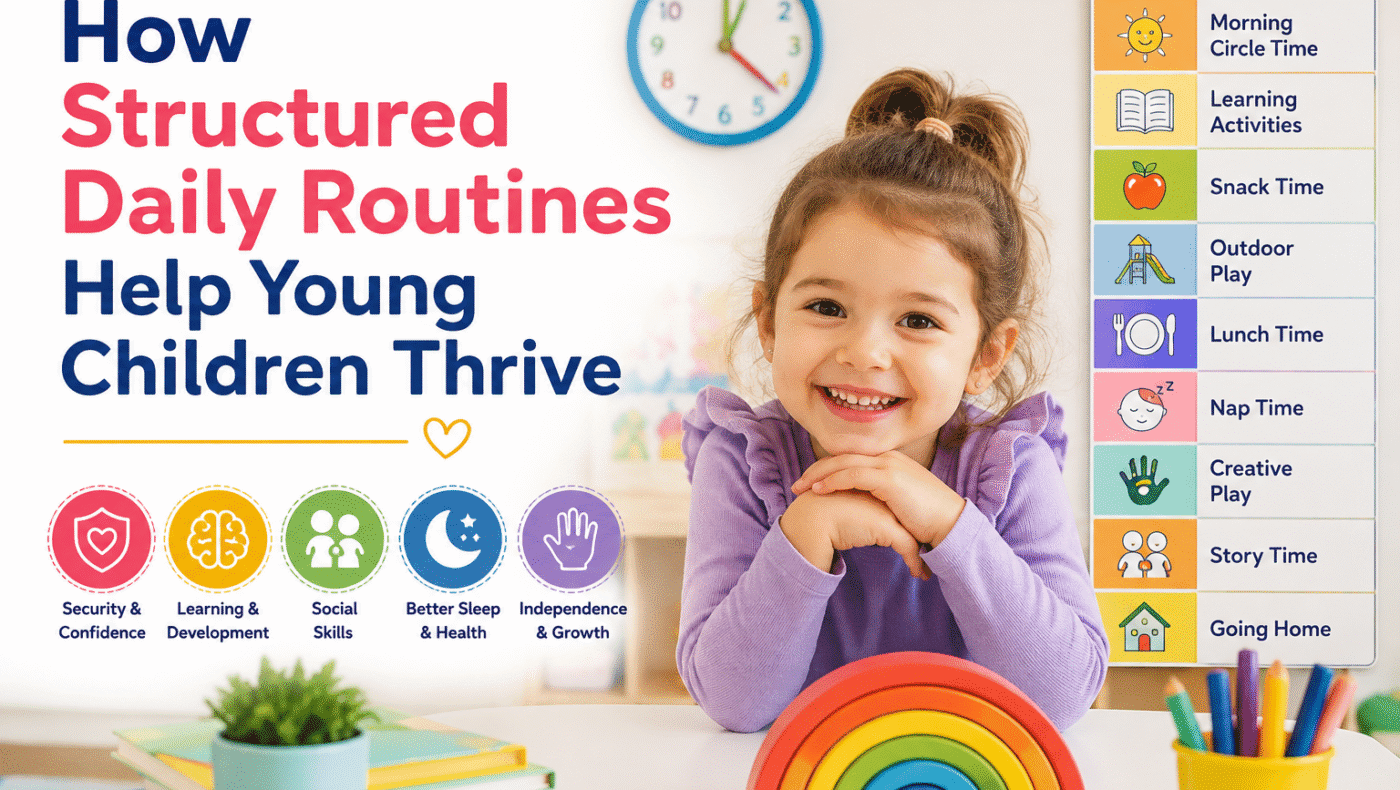
  1. Access to Structured Daily Routines

Children thrive on consistency.

A predictable schedule creates security and reduces anxiety.

Typical daycare routines may include:

Morning activities

Children begin with welcome routines and educational play.

Learning sessions

Structured activities focus on developmental goals.

Meals and snacks

Nutritious food and social interaction occur during meal times.

Outdoor play

Physical movement supports health and coordination.

Rest periods

Quiet time helps children recharge.

Routine teaches time awareness and helps children understand expectations.

  1. Better Long-Term Outcomes

Quality early childhood experiences can influence future success.

Studies have linked high-quality childcare experiences with:

  • Better academic performance
  • Higher graduation rates
  • Stronger communication skills
  • Improved social behavior
  • Increased confidence

While no daycare guarantees future success, early educational foundations can significantly shape long-term development.

  1. Greater Peace of Mind for Parents

Parents often juggle work, family responsibilities, and personal commitments.

Knowing your child is in a safe, supportive, and educational environment reduces stress.

Parents can focus on work and daily responsibilities without constantly worrying about:

  • Child safety
  • Learning opportunities
  • Emotional well-being
  • Social interaction
  • Quality of care

Peace of mind is difficult to measure, but it remains one of the most valuable benefits for families.

How to Identify a Quality Three-Star Daycare Center

Not every daycare is the same, even within certification programs.

When evaluating a center, consider asking questions such as:

  • How are teachers trained?
  • What curriculum is used?
  • How are parents informed about progress?
  • What are classroom sizes?
  • How are behavioral challenges handled?
  • What safety procedures exist?

Schedule a visit and observe:

  • Teacher-child interactions
  • Classroom organization
  • Cleanliness
  • Child engagement
  • Overall atmosphere

Seeing the environment firsthand helps parents make informed decisions.

Final Thoughts

Choosing childcare is a significant decision that affects both parents and children. A Texas Rising Star Three-Star Daycare Center offers numerous advantages that extend beyond basic childcare services.

From highly trained teachers and stronger educational programs to safe environments and enhanced social development, these centers provide meaningful support during some of the most important years of a child’s life.

Every family has unique priorities and needs, but for parents seeking a daycare that combines quality education, developmental support, and dependable care, a Texas Rising Star Three-Star center can be a valuable investment in a child’s future.

The early years of childhood create the foundation for lifelong learning and success. Selecting a daycare committed to excellence can make a lasting difference for both children and their families.

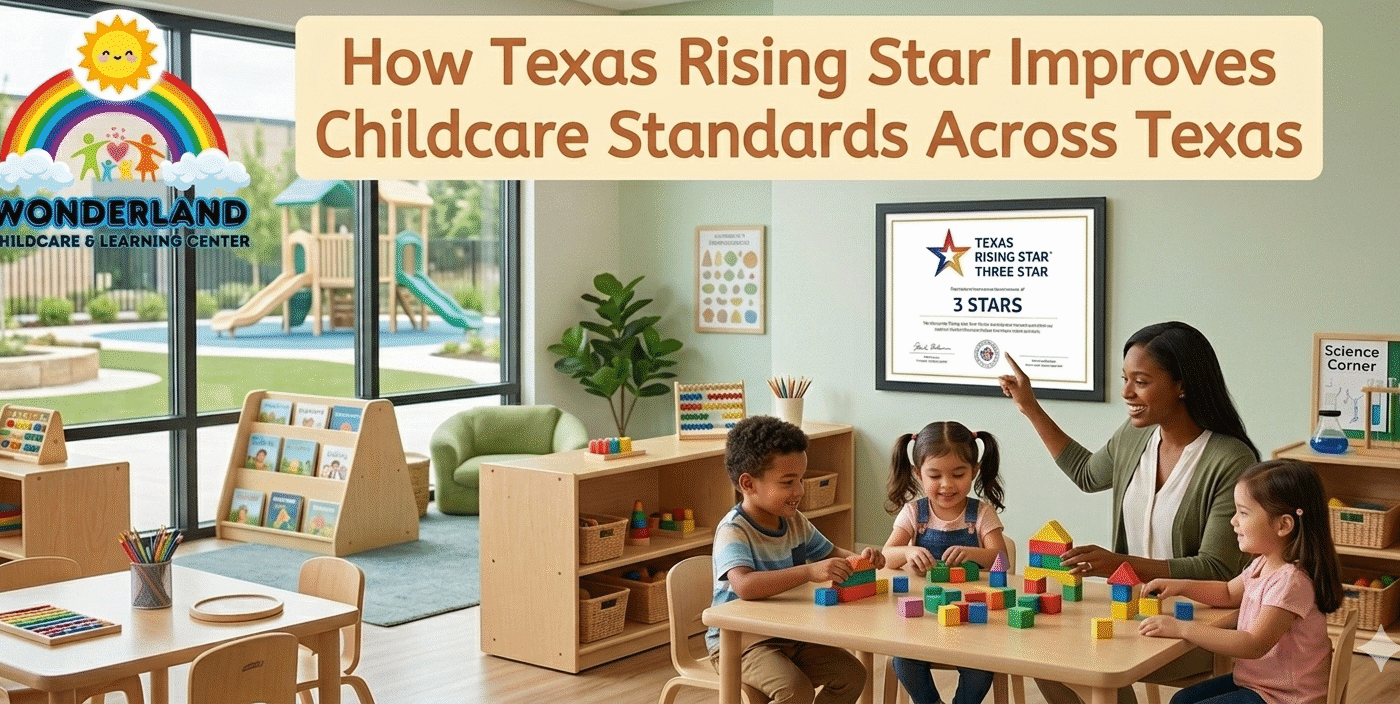
How Texas Rising Star Improves Childcare Standards Across Texas

Finding quality childcare is one of the biggest concerns for parents across Texas. Families want safe, educational, and nurturing environments where their children can grow emotionally, socially, and academically. To help improve childcare quality statewide, the Texas Rising Star Program was created as a quality rating and improvement system for childcare providers.

The program plays a major role in raising childcare standards by encouraging daycare centers and early learning programs to exceed minimum state requirements. Through structured evaluations, staff training, educational improvements, and ongoing accountability, Texas Rising Star helps childcare providers deliver better experiences for children and families throughout Texas.

Understanding how this program improves childcare standards can help parents make informed decisions when choosing the right childcare provider for their children.

What Is the Texas Rising Star Program

The Texas Rising Star program is designed to recognize and support childcare providers who demonstrate higher-quality practices than standard licensing requirements.

Managed by the Texas Workforce Commission, the program evaluates childcare centers in several important categories, including:

Teacher qualifications and education
Classroom environments and curriculum
Teacher-child interactions
Health and safety procedures
Parent communication and engagement

Providers are assigned ratings ranging from Two-Star to Four-Star depending on the quality of care they provide.

This rating system encourages childcare centers to continuously improve their services while helping parents identify trusted and development-focused programs.

Raising Standards Beyond Basic Licensing

All licensed childcare centers in Texas are required to meet minimum safety and operational standards established by the state. While licensing is essential, it only represents the baseline level of care.

Texas Rising Star improves childcare standards by encouraging providers to go beyond those minimum requirements.

The program evaluates factors that directly affect child development, including:

Quality of learning experiences
Emotional support and teacher interactions
Classroom structure and engagement
Professional development for educators
Family involvement and communication

This focus on quality improvement creates better environments where children can thrive academically and emotionally.

Encouraging Better Teacher Training

One of the most important ways Texas Rising Star improves childcare quality is through educator training and professional development.

Teachers and caregivers have a major impact on how children learn and develop during early childhood. The program encourages childcare providers to invest in staff education and ongoing training opportunities.

Educators in Texas Rising Star programs often receive training in:

Child development stages
Positive behavior guidance
Classroom management techniques
Early learning strategies
Health and safety practices

Well-trained teachers are better prepared to support children’s emotional, social, and academic growth.

When childcare staff understand how children learn and develop, they can create more engaging and supportive classroom experiences.

Improving Early Learning Experiences

Texas Rising Star emphasizes the importance of early education and school readiness. High-quality childcare programs do more than supervise children during the day. They provide structured learning opportunities that encourage growth and development.

Participating childcare centers are encouraged to offer activities that support:

Language and communication development
Problem-solving and critical thinking
Creativity and imagination
Social interaction and teamwork
Early literacy and math skills

Children benefit from environments where learning is interactive, engaging, and developmentally appropriate.

These educational improvements help prepare children for kindergarten and future academic success.

Promoting Positive Teacher-Child Interactions

Healthy teacher-child relationships are essential for emotional development and learning. Texas Rising Star evaluates how educators communicate with and support children throughout the day.

High-quality childcare providers are expected to:

Treat children with respect and patience
Encourage independence and curiosity
Respond positively to emotional needs
Create inclusive classroom environments
Support healthy social interactions

Positive interactions help children build confidence, trust, and emotional security.

Children who feel supported by caregivers are more likely to participate actively in learning and develop healthy social behaviors.

Creating Safer and Healthier Childcare Environments

Another major benefit of Texas Rising Star is its focus on health and safety improvements.

Participating childcare centers are encouraged to maintain:

Clean and sanitized classrooms
Safe indoor and outdoor play areas
Secure entry and exit procedures
Age-appropriate equipment and learning materials
Emergency preparedness plans

These enhanced standards help protect children while creating environments where they can safely explore and learn.

Parents also gain peace of mind knowing their child is in a secure and well-managed facility.

Encouraging Structured Daily Routines

Children benefit greatly from consistency and routine during early childhood. Texas Rising Star programs are encouraged to follow organized schedules that support emotional security and healthy development.

Structured routines often include:

Learning and educational activities
Physical activity and outdoor play
Meals and snack times
Quiet or nap periods
Creative exploration and group interaction

Predictable schedules help children feel comfortable and reduce anxiety during transitions between activities.

This structure also supports discipline, independence, and positive behavior development.

Supporting Family Engagement

Texas Rising Star recognizes that parents and caregivers play an important role in a child’s development. The program encourages childcare centers to build strong relationships with families through open communication and involvement.

High-quality providers often offer:

Daily reports and updates
Parent-teacher meetings
Educational resources for families
Progress observations and developmental feedback

Strong communication helps parents stay informed about their child’s experiences and growth.

Family engagement also creates consistency between home and childcare environments, which benefits children emotionally and academically.

Continuous Quality Improvement

One of the biggest strengths of Texas Rising Star is its focus on ongoing improvement. Childcare providers must continue meeting quality standards to maintain their ratings.

This encourages centers to regularly improve:

Teacher training and certifications
Classroom environments
Educational materials and curriculum
Safety procedures and policies
Parent communication strategies

Rather than meeting standards once and remaining unchanged, providers are motivated to continue growing and improving over time.

This commitment to progress helps raise childcare standards across the entire state of Texas.

Helping Parents Make Informed Decisions

Choosing childcare can feel overwhelming for many families. Texas Rising Star helps simplify the process by providing a trusted quality rating system.

Parents can use these ratings to compare childcare providers based on:

Educational quality
Teacher qualifications
Learning environments
Safety standards
Parent communication practices

This transparency allows families to make more informed decisions when selecting childcare programs.

Parents gain confidence knowing that Texas Rising Star providers have been evaluated using higher standards focused on child development and quality care.

Supporting School Readiness

Preparing children for school is one of the main goals of high-quality early education programs.

Texas Rising Star encourages providers to help children develop skills such as:

Listening and following directions
Communication and language development
Early math and literacy understanding
Social cooperation and teamwork
Emotional regulation and independence

Children who participate in high-quality early learning programs often transition more smoothly into kindergarten.

Strong school readiness skills can positively influence future academic performance and classroom confidence.

Benefits for Working Families

Texas Rising Star also supports working parents by helping improve access to reliable and affordable quality childcare.

Families benefit from:

Higher quality educational experiences
Safer and more nurturing childcare environments
Better communication with providers
Confidence in childcare decisions

For many parents, having access to trusted childcare allows them to focus on work and family responsibilities while knowing their children are receiving quality care.

Long-Term Impact on Children

The improvements encouraged by Texas Rising Star can have lasting effects on children’s lives.

Research consistently shows that children who attend high-quality early learning programs are more likely to:

Develop strong communication skills
Perform better academically
Build healthy social relationships
Show improved emotional confidence
Develop independence and problem-solving abilities

Early childhood experiences play a major role in shaping future learning and behavior.

By improving childcare standards statewide, Texas Rising Star helps support better long-term outcomes for children across Texas.

Why Texas Rising Star Matters

Texas Rising Star is more than a rating system. It is a statewide effort to improve childcare quality, support educators, and strengthen early childhood development.

The program helps childcare providers:

Enhance educational practices
Improve teacher training
Strengthen safety standards
Support emotional and social growth
Build stronger relationships with families

At the same time, it gives parents a reliable way to identify childcare providers that prioritize quality care and learning.

Final Thoughts

The Texas Rising Star Program continues to play a vital role in improving childcare standards across Texas. By encouraging higher-quality education, stronger teacher training, safer environments, and better family engagement, the program helps create positive early learning experiences for children statewide.

For parents searching for childcare, Texas Rising Star ratings provide valuable guidance and reassurance. These ratings represent a provider’s commitment to continuous improvement and quality early childhood education.

As childcare standards continue to improve through programs like Texas Rising Star, more children across Texas can benefit from nurturing environments that support lifelong learning, confidence, and success.

Texas Rising Star Three Star

What Makes Texas Rising Star Three-Star Childcare High Quality?

Choosing childcare is one of the most important decisions parents make during their child’s early years. Families want more than supervision. They want a safe, nurturing, and educational environment where children can develop emotionally, socially, and academically. In Texas, the Texas Rising Star Program helps parents identify childcare providers that meet higher standards of excellence.

Among the different rating levels, Three-Star childcare programs are widely recognized for offering strong educational foundations, qualified teachers, structured learning environments, and high-quality care practices. These programs go beyond minimum licensing standards and focus on creating meaningful early childhood experiences that positively shape a child’s future.

Understanding what makes Texas Rising Star Three Star childcare high-quality can help parents confidently choose the right childcare provider for their family.

Understanding the Texas Rising Star Program

The Texas Rising Star program is a quality rating and improvement system designed for childcare providers participating in the Texas subsidized childcare system. Managed under the supervision of the Texas Workforce Commission, the program evaluates providers using standards that exceed basic state licensing requirements.

Childcare providers are assessed in several categories, including:

Teacher qualifications and training
Learning environments and curriculum
Teacher-child interactions
Health and safety practices
Parent engagement and communication

Providers receive ratings ranging from Two-Star to Four-Star based on their performance. A Three Star rating reflects a high level of quality and demonstrates that the provider consistently meets strong childcare and educational standards.

Qualified and Well-Trained Teachers

One of the biggest factors that defines a high-quality Three Star childcare program is the quality of its teachers and caregivers. Early childhood educators play a major role in shaping how children learn, communicate, and interact with others.

Three-Star providers invest heavily in staff development and professional training. Teachers are trained to understand:

Child development stages
Positive behavior guidance techniques
Age-appropriate learning methods
Emotional and social development strategies
Classroom management practices

Well-trained teachers create supportive environments where children feel safe, encouraged, and motivated to learn.

Children benefit greatly from caregivers who understand how to nurture confidence, curiosity, and independence during the early years of development.

Strong Focus on Early Learning

High-quality childcare programs do more than simply watch children throughout the day. Texas Rising Star Three-Star centers emphasize structured learning experiences that prepare children for future academic success.

Learning activities are intentionally designed to help children develop important skills such as:

Language and communication
Early reading and literacy
Basic math and problem-solving
Creativity and imagination
Social interaction and teamwork

These programs combine education with engaging activities that make learning enjoyable and meaningful for young children.

Rather than relying on passive entertainment, Three-Star providers encourage active participation, exploration, and hands-on experiences that stimulate cognitive growth.

Positive Teacher Child Interactions

The way teachers communicate and interact with children has a major impact on emotional and social development. Texas Rising Star places a strong emphasis on positive teacher-child relationships because they are essential for building confidence and trust.

In a Three-Star classroom, teachers are expected to:

Communicate respectfully and patiently
Encourage children to express themselves
Respond positively to emotional needs
Support independent thinking and curiosity
Create inclusive and welcoming environments

Children who experience positive interactions with caregivers often develop stronger emotional regulation skills and better social confidence.

Supportive relationships also help children feel secure, which improves learning outcomes and classroom participation.

Safe and Organized Learning Environments

A high-quality childcare environment must be both safe and engaging. Texas Rising Star Three-Star providers are evaluated carefully to ensure that classrooms support healthy child development.

These programs typically maintain:

Clean and sanitized classrooms
Secure entry and exit systems
Safe indoor and outdoor play spaces
Age-appropriate toys and learning materials
Organized classroom layouts that encourage learning

Safety standards in Three Star programs often exceed minimum licensing requirements, giving parents additional peace of mind.

A well-organized environment also helps children feel comfortable and focused throughout the day.

Structured Daily Routines

Consistency and structure are important for young children. Texas Rising Star Three-Star childcare programs follow organized daily schedules that balance learning, play, meals, and rest.

Structured routines help children:

Develop discipline and responsibility
Feel emotionally secure
Improve time awareness
Transition smoothly between activities

A typical day may include:

Morning learning sessions
Creative arts and crafts
Group activities and storytelling
Outdoor play and exercise
Meal and snack times
Quiet or nap periods

These predictable routines support emotional stability while helping children build positive habits.

Learning Through Play

Play-based learning is one of the core elements of high-quality early childhood education. Texas Rising Star Three-Star programs recognize that children learn best when they are actively engaged in enjoyable experiences.

Learning through play helps children develop:

Communication and language skills
Problem-solving abilities
Creativity and imagination
Motor coordination
Social cooperation

Activities such as building blocks, puzzles, pretend play, art projects, and music sessions encourage children to explore and think independently.

This balanced approach allows children to enjoy childhood while developing essential academic and social skills.

Family Engagement and Parent Communication

Another reason Three-Star childcare programs are considered high quality is their focus on family involvement. Strong communication between parents and childcare providers creates consistency in a child’s learning and behavior development.

Three-Star programs often provide:

Daily updates about activities and behavior
Progress reports and developmental observations
Parent-teacher meetings
Family events and educational resources

When parents stay informed and involved, children benefit from stronger emotional support both at home and in childcare settings.

Open communication also helps parents feel confident and connected to their child’s daily experiences.

School Readiness and Academic Preparation

One of the biggest goals of high-quality childcare is preparing children for kindergarten and future education. Texas Rising Star Three-Star programs focus heavily on school readiness skills.

Children are encouraged to develop abilities such as:

Listening and following instructions
Recognizing letters and numbers
Communicating effectively
Working independently and in groups
Managing emotions appropriately

Children who attend high-quality early learning programs often enter school with stronger confidence and better academic foundations.

This early preparation can contribute to long-term educational success and smoother classroom transitions.

Emotional and Social Development

Academic learning is only one part of early childhood development. High-quality childcare programs also prioritize emotional growth and social skills.

Three-Star providers help children learn how to:

Share and cooperate with others
Express feelings appropriately
Resolve conflicts peacefully
Build friendships and empathy
Develop confidence and self-control

These life skills are essential for future success both inside and outside the classroom.

Children who develop strong emotional intelligence during early childhood often adapt better to school environments and social situations later in life.

Ongoing Quality Improvement

One of the most valuable aspects of the Texas Rising Star system is continuous improvement. Providers are not given a rating permanently. They must continue meeting standards and improving their practices to maintain their status.

Three-Star providers regularly work on:

Staff training and certifications
Classroom improvements
Educational planning
Health and safety enhancements
Parent engagement strategies

This commitment to improvement ensures that children continue receiving high-quality care and education over time.

Why Parents Choose Three Star Childcare

Parents often prefer Texas Rising Star Three-Star programs because they provide an excellent balance of affordability, education, and reliability.

Compared to standard childcare centers, these programs usually offer:

Better learning environments
More experienced educators
Higher safety standards
Stronger communication with families
Greater focus on child development

For working families, this level of quality provides reassurance that children are spending their day in a positive and enriching environment.

How to Identify a High Quality Three-Star Program

Even within the same rating category, every childcare provider is unique. Parents should still evaluate programs carefully before making a decision.

When visiting a childcare center, observe:

Teacher interaction with children
Cleanliness and organization
Children’s engagement in activities
Safety measures and supervision
Communication style with families

Ask questions about curriculum, teacher qualifications, and classroom routines. A quality provider should be transparent and confident when discussing their childcare philosophy.

Questions Parents Should Ask

Before enrolling your child in a Three-Star program, consider asking the following questions:

What educational activities are included daily
How do teachers handle behavior challenges
What training do staff members receive
How does the center communicate with parents
What safety procedures are in place

The answers can help parents better understand the provider’s approach to childcare and education.

Long-Term Benefits of High-Quality Childcare

High-quality early education has lasting effects on a child’s future development. Studies show that children who attend strong early learning programs are more likely to:

Develop better communication skills
Show improved social behavior
Perform better academically
Build confidence and independence

The experiences children gain during early childhood often shape their attitudes toward learning for years to come.

Investing in quality childcare during these important developmental years can create lifelong benefits.

Final Thoughts

The Texas Rising Star Program Three-Star childcare program represents a strong commitment to education, safety, emotional development, and family engagement.

These providers offer much more than daycare services. They create nurturing environments where children can grow academically, socially, and emotionally through structured learning and supportive relationships.

For parents searching for trusted childcare in Texas, understanding what makes Three Star programs high-quality can simplify the decision-making process. From qualified teachers and engaging learning experiences to strong safety standards and school readiness preparation, these programs provide children with the foundation they need for future success.

Choosing a Texas Rising Star Three-Star childcare provider is an investment in your child’s growth, confidence, and lifelong learning journey.

What Is Texas Rising Star Three-Star Childcare? A Complete Guide for Parents

Choosing the right childcare provider is one of the most important decisions a parent can make. Beyond safety and convenience, you want an environment that actively supports your child’s growth, learning, and emotional well-being. This is where the Texas Rising Star program becomes especially valuable.

If you have come across the term Texas Rising Star Three-Star Childcare, you might be wondering what it actually means and whether it is the right choice for your family. This guide explains everything in simple terms so you can make a confident decision.

What Is Texas Rising Star?

Texas Rising Star is a statewide quality rating and improvement system that evaluates childcare providers beyond basic licensing requirements.

All licensed childcare centers in Texas must meet essential health and safety standards. However, Texas Rising Star certified providers are assessed on additional factors such as:

  • Staff qualifications and training
  • Curriculum and learning activities
  • Teacher and child interactions
  • Indoor and outdoor learning environments
  • Parent communication and engagement

Providers receive ratings based on their performance. These include Two-Star, Three-Star, and Four-Star levels, with each level reflecting increasing quality.

What Does Three-Star Mean in Texas Rising Star?

A Texas Rising Star Three-Star childcare provider is considered a high-quality program that goes well beyond standard childcare expectations.

This rating shows that the center consistently meets strong benchmarks across important areas like education, safety, and child development.

Key Features of Three-Star Childcare

Strong Teaching and Learning Practices

Three-Star centers follow structured and research-based learning programs. Activities are designed to support:

  • Language and communication skills
  • Cognitive growth
  • Creativity and problem-solving
  • Social and emotional development

Teachers are actively involved with children instead of simply supervising them.

Qualified and Trained Staff

Staff members in Three-Star programs usually receive ongoing training. Many educators hold certifications or have experience in early childhood education.

This ensures your child is guided by professionals who understand how children learn and grow.

Engaging Learning Environment

Classrooms in Three-Star centers are designed to encourage exploration and development. You will typically find:

  • Organized and age-appropriate setups
  • Educational toys and materials
  • Spaces that support both learning and play

Children are encouraged to explore, ask questions, and participate in activities.

Ongoing Monitoring and Accountability

Texas Rising Star providers are regularly assessed to ensure they continue meeting quality standards. This helps maintain consistency in the level of care provided.

Strong Parent Communication

Three-Star childcare centers prioritize keeping parents informed. This may include:

  • Daily updates about your child
  • Progress tracking
  • Regular communication with teachers

This level of transparency helps build trust and keeps you involved in your child’s development.

Why Texas Rising Star Three-Star Childcare Matters

Better School Readiness

Children who attend high-quality childcare programs are more prepared for school. They develop early skills in language, numbers, and social interaction.

Three-Star centers focus on building these foundations from an early age.

Improved Social and Emotional Development

Children learn important life skills such as sharing, communication, and emotional control. These skills help them succeed both in school and in everyday situations.

Safe and Supportive Environment

Three-Star providers maintain higher standards for safety, cleanliness, and emotional support. This creates a secure space where children feel comfortable and confident.

Peace of Mind for Parents

Knowing your child is in a reliable and structured environment allows you to focus on your daily responsibilities without constant worry.

Texas Rising Star Rating Levels Explained

Understanding the different levels can help you choose the right childcare option.

  • Two-Star centers meet basic quality improvement standards
  • Three-Star centers provide high-quality care with a strong focus on learning and development
  • Four-Star centers represent the highest level of childcare quality

Three-Star childcare offers a strong balance between quality and affordability, making it a popular choice for many families.

How to Choose a Texas Rising Star Three-Star Childcare Center

Even within Three-Star centers, quality can vary. Visiting a center and observing the environment is important.

What to Look For

  • Teachers interacting positively with children
  • Clean and organized classrooms
  • Children engaged in activities
  • Safe and welcoming surroundings

Questions You Can Ask

  • What type of curriculum do you follow
  • How do you monitor my child’s progress
  • What training do your teachers receive
  • How do you manage behavior and discipline

These questions will help you evaluate whether the center meets your expectations.

Is Texas Rising Star Three-Star Childcare Right for You?

A Texas Rising Star Three-Star childcare program is a great fit for parents who want:

  • A structured learning environment
  • Experienced and trained staff
  • A focus on child development
  • Good quality care at a reasonable cost

If you want your child to grow in a supportive and educational setting, this option is worth considering.

Final Thoughts

Childcare is not just about supervision. It plays a key role in shaping your child’s future. Choosing a provider within the Texas Rising Star system at the Three-Star level ensures your child receives quality care, education, and emotional support.

By understanding what this rating means, you can make a confident decision that benefits your child’s growth and development.

This will close in 0 seconds